


Who should attend
Mobility Hubs 2026 is designed for professionals responsible for shaping transport systems and places:
-
Local authorities and combined authorities
-
Transport planners and urban designers
-
Bus and rail operators
-
Shared mobility and micromobility providers
-
Parking and EV charging providers
-
Developers and regeneration specialists
-
Technology and infrastructure providers
-
Active travel, accessibility, and sustainability professionals
-
National government and policy bodies
Programme highlights
-
National policy and strategy updates
-
Case studies from across the UK and beyond
-
Local authority hub network development
-
Urban and rural hub projects
-
Integration with rail and bus interchanges
-
Cycle parking and active travel infrastructure
-
Shared mobility schemes
-
Delivery and logistics hubs
-
EV charging integration
-
Interactive workshops and peer discussions
Site Visits
(Optional - Wednesday 7th October 5PM)
Join the Leicester City Council team for post-event site visits offering a closer look at how Leicester is delivering its transport strategy, including:
-
Cycle hubs and infrastructure
-
Walking and cycling routes
-
Park & Ride facilities
Attendees joining the tour are also welcome to join us for a drink at the Transport, Planning and Health pre-event networking reception, taking place at The Rutland and Derby Arms, Leicester.
Programme
Please note programme is currently in development.
09.00
Registration
Tea & coffee served in the exhibition area
09.45
Session 1: Sharing the journey
Chair: Robert Davis, Head of Active & Sustainable Travel, Trueform
Welcome
An introduction to Mobility Hubs 2026.
-
Sir Peter Soulsby, Mayor of Leicester
Keynote: Creating an active and connected city
Leicester City Council is in the vanguard of the UK’s active cities, championing and implementing a renaissance in cycling, walking and the use of public transport.
Leicester organises its mobility services to support active and connected travel around the city. Leicester is facilitating walking and wheeling, supporting e-mobility, creating cycle hubs and enhancing passenger transport and exploring new approaches to park & ride.
-
Daniel Pearman, City Transport Director, Leicester City Council
Developing a regional transport plan
The East Midlands Combined County Authority (EMCCA) is developing a single long-term Local Transport Plan – called the Mayor's Transport Plan – focusing on a unified regional network, better buses, and decarbonisation.
-
Claire Maltby, Head of Transport Strategy, EMCCA
Nottingham’s mobility hubs project
Nottingham City Council's Future Travel Zones project sees mobility hubs being trialled in Nottingham neighbourhoods as a way to bring together a variety of public, shared and sustainable transport modes in a convenient place.
-
Iain Turner, Transport Planner, Nottingham City Council
Panel discussion
11.00
Networking break
Tea & coffee served in the exhibition area
11.30
Session 2a: Building positive links between people and places
The mobility hubs approach encourages local authorities, public transport operators and shared mobility providers to work in partnership to improve local connectivity.
Chair: Andy Salkeld, Transport Service Manager – Active Travel, Leicester City Council
Mobility hubs: The big picture
Collaborative Mobility UK will review the national landscape of mobility hubs, including the latest policy landscape with respect to national and private stakeholders. CoMoUk will also show how 'pop-up' hubs can engage the public and support the roll-out of mobility hubs.
-
Will Airey, Senior Policy & Research Officer, CoMoUK
The mobility hub toolkit
Trueform provides a guide to the key elements that make up mobility hubs, enabling project developers to create effective scheme design, delivery and maintenance.
-
Robert Davis, Head of Active & Sustainable Travel, Trueform
Creating a connected cycle city
A look at the role of Leicester's Cycle Hubs membership scheme, which provides access to secure bike parking facilities around the city, and the Bike Park secure cycle hub in Town Hall Square.
-
Andy Salkeld, Transport Service Manager - Active Travel Networks, Leicester City Council
Leicester Buses 'One Network' Partnership
A five-year bus transformation programme has seen an investment of over £200m and 200 partnership commitments. By April 2027, the partnership will have delivered a fully integrated network to five key standards - electric, frequent, reliable, easy and great value. Leicester's One Network delivers the same as Manchester's Bee Network, but through a statutory partnership rather than franchising. Delivery has been achieved in a financially sustainable way, quickly and with shared risk and responsibilities over 8 partners.
-
Andy Gibbons, Head of Buses, Leicester City Council
Hidden in plain sight: The route to the right mobility hub locations
You already hold more of the answer than you realise. What if your data could finally show you what it knows?
Join Matt Stagg, drawing on years spent delivering bus infrastructure surveys across the UK, as he reveals how to move away from unsustainable spreadsheets and photo folders, into systematically managed, actionable intelligence, ready to pinpoint exactly where your planned or organic mobility hubs naturally fit. Built specifically for bus infrastructure teams and simple enough for anyone to use, this isn't just about location.
It's a fully reportable system that solves problems you didn't expect a survey tool to touch, from GDPR compliance on stored images to route reporting ahead of franchising and business case reporting.
-
Matthew Stagg, Managing Director, Externiture
On the right track
The Derwent Valley Line train service operates between Matlock, Belper, Derby and Nottingham, providing easy access to tourist attractions and a service for local residents. The Derwent Valley Line Community Rail Partnership is looking at how mobility hubs could enhance local connectivity.
-
David Glasby, Community Rail Officer, Derwent Valley Line Community Rail Partnership
Panel discussion
Session 2b: Providing equitable, accessible and safer mobility
Walking, wheeling and cycling...
Mobility hubs have a key role to play in supporting active travel, integrated transport and more equitable access to work, study and leisure opportunities.
Chair: John Dales, Founder, Urban Movement & Chair, Living Streets
Keynote: Unlocking multi-modal journeys for everyone
Walk Wheel Cycle Trust research provides insights into what determines travel choice and the role of mobility hubs.
-
Tim Burns, Head of Research, Walk Wheel Cycle Trust (formerly Sustrans)
Paving the way for walking
The design of streetscapes and wayfinding is crucial to making mobility hubs work
-
John Dales, Founder, Urban Movement & Chair, Living Streets
Accessible cycling provision
Inclusive cycling programmes aim to remove barriers to cycling, especially for those with disabilities.
-
Ian Tierney, Chief Partnerships Officer, Wheels for All
Panel discussion
Designing safer mobility hubs for women and girls
Fatkin is an architectural practice that works extensively in the design of mobility interchange and parking facilities at locations such as rail stations and hospitals.
Over the past year Fatkin has been working with Susannah Walker of In Her Place on a project which seeks to show how the physical layout, lighting, human scale, and clear sightlines of transit hubs and public spaces influence the confidence and security of women and girls.
This session will share the results of the study and invite a guest panel and delegates to discuss ways of making travel safer for women and girls.
Presentation:
-
Hollie Deverell, Associate & Senior Architect, Fatkin
-
Josie Venning, Associate & Senior Architectural Designer, Fatkin
The panel includes:
-
Daisy Chapman-Chamberlain, Rail Services Lead, Rail North Partnership
-
Janet Hudson, Senior Project Manager, Leicester City Council
-
Guy Kippen, Strategic Sites Project Manager, Wychavon District Council
-
Susannah Walker, In Her Place, Consultant, In Her Place
13.00
Networking lunch
Refreshments served in the exhibition area
14.00
Session 3: Planning mobility hubs for new developments
Many housing developments remain car-dependent. However, progressively minded local authorities and developers are working to create communities served by a good mix of local travel options, including shared mobility services at local transport hubs.
Chair: Dominic Scholfield, Senior Mobility Consultant, Cenex
Keynote: Homes England on mobility hubs
Homes England’s new mobility hubs guidance promotes user-centred transport integration, focusing on active travel, shared transport, and placemaking within new developments.
-
Jon Sandford, Senior Manager, Master Development and Design Team, Homes England
Creating sustainable travel options for new housing
How data-driven solutions can help build strong partnerships between housing developers, local authorities and transport providers to make sustainable travel a reality.
-
Robin Pointon, Managing Director, GO Travel Solutions
The Mobility Hubs Game
Produced by Cenex
Mobility Hubs 2026 will feature an interactive session in which delegates are divided into groups and assigned roles (developers, residents, councillors, planners and transport providers).
Low carbon mobility consultancy Cenex ran a popular game based around rural mobility issues at Mobility Hubs 2025.
This year Cenex has devised the session based on discussions with local authority officers, developers and planning experts.
Session developed and led by:
-
Dominic Scholfield, Senior Mobility Consultant, Cenex
-
Hegazy Ibrahim, Technical Specialist, Cenex
-
Beth Morley, Human Insights Lead, Cenex
15.30
Networking break
Tea & coffee served in the exhibition area
15.45
Session 4: Journey planner: Where are mobility hubs heading?
Mobility Hubs 2026 will conclude with presentations and a discussion looking at the next stages in the mobility hubs journey.
Chair: Andrew Smith, Director of Planning, Transportation and Economic Development, Leicester City Council
Connecting buses, rail, walking, wheeling, cycling and micro-mobility
North Somerset Council is rolling out a network of upgraded transport and mobility hubs funded by the UK Government's Bus Service Improvement Plan (BSIP). Key sites include the Gold Standard-accredited Worle Interchange, the Weston Hospital hub, and the Pill Precinct hub, alongside planned upgrades across Clevedon, Nailsea, and Portishead.
-
Annabelle Fortune, Head of Transport Planning, North Somerset Council
Measuring success: Evidence-based evaluation
Having worked to plan, launch and then operate mobility hubs, there is a need to understand how well they are performing so as to inform future developments. This presentation presents a potential evaluation framework for mobility hubs.
-
Tom Arnold, Transport Planner, Nottingham City Council
Future directions for mobility hubs
The mobility hub approach offers an opportunity to convert urban spaces such as under-utilised car parks in town centres and retail destinations into facilities such as.
-
Electric vehicle hubs which cater for car clubs and taxis
-
Last-mile hubs hosting parcel lockers and self-storage solutions
-
Retail kiosks, food vans and cafés.
Expanding some mobility hubs into 'service hubs' can create community spaces where people can chat and meet as well as enhance local amenity and provide employment. But there are planning considerations, operational barriers and commercial challenges that need to be overcome when looking to create enhanced hubs.
Panel discussion
16.45
Event close
Speakers
Speakers will appear here once confirmed.

Sir Peter Soulsby
Mayor
Leicester City Council


Hollie Deverell
Associate & Senior Architect
Fatkin

Jon Sandford
Senior Manager, Master Development & Design Team
Homes England

Will Airey
Senior Policy and
Research Officer
CoMoUK

Andy Gibbons
Head of Buses
Leicester City Council

Tim Burns
Head of Research
Walk Wheel Cycle Trust

Susannah Walker
Consultant
In Her Place

Annabelle Fortune
Head of Transport Planning
North Dorset Council

Daniel Pearman
City Transport Director
Leicester City Council

Josie Venning
Associate & Senior Architectural Designer
Fatkin

Claire Maltby
Head of Transport Strategy
EMCCA

Andy Salkeld
Transport Service Manager -
Active Travel Networks
Leicestet City Council

Tom Arnold
Transport Planner
Nottingham City Council

John Dales
Founder
Urban Movement

Dominic Scholfield
Senior Mobility Consultant
Cenex

Guy Kippen
Strategic Sites Project Manager
Wychaven District Council

Robert Davis
Head of Active & Sustainable Travel
Trueform

Matthew Stagg
Managing Director
Externiture

Andrew Smith
Director of Planning, Transportation & Economic Development
Leicester City Council

Robin Pointon
Managing Director
GO Travel Solutions

Janet Hudson
Senior Project Manager
Leicester City Council
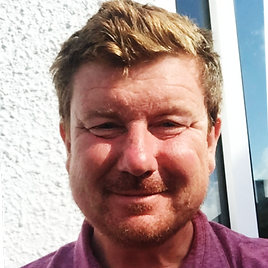
Ian Tierney
Chief Partnerships Officer
Wheels for All

Beth Morley
Human Insights Lead
Cenex

Daisy Chapman-Chamberlain
Rail Services Lead
Rail North Partnership


